
2. Children of God's People in the Promises of God
By Gerry Straker, 24 May 2022
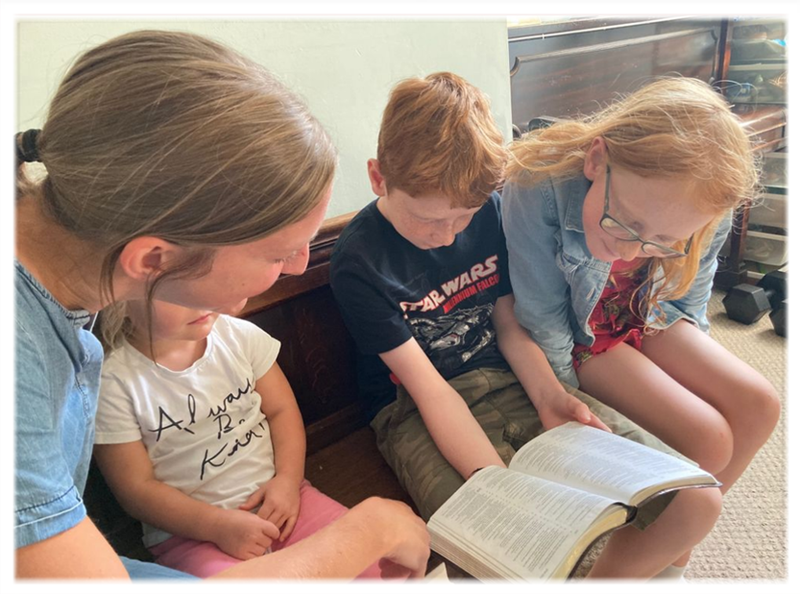
In these five articles we are looking at what the Bible says about the children of God’s people:
- The Status of the Children of God’s People
- Children of God’s People in the Promises of God
- Children of God’s People Join God’s People
- Children of God’s People Live as God’s People
- Conclusion: Children of God's People are God's People
We are building a picture to show that in both the Old Testament and New Testament, children of believers are welcomed in by God as his people.
CHILDREN OF GOD’S PEOPLE IN THE PROMISES OF GOD
In our first article we saw the status of children in God’s people. In this second article we consider the promises that God makes about children. In this article I lean heavily on Doug Wilson’s very helpful book ‘Standing on the Promises.’
1. God promises to bless families
In the first article we saw that God deals with families e.g. Noah (Genesis 6:18). In the promises to Abraham, God promises to bless Abraham and his offspring (Genesis 17:7). The promise to Abraham is for his descendants and God’s promises continue to be for the generations to come: ‘Know therefore that the LORD your God is God; he is the faithful God, keeping his covenant of love to a thousand generations of those who love him and keep his commands.’ (Deuteronomy 7:9; see also: Deuteronomy 5:9-10).
'My servant David will be king over them, and they will all have one shepherd. They will follow my laws and be careful to keep my decrees. They will live in the land I gave to my servant Jacob, the land where your fathers lived. They and their children and their children's children will live there for ever, and David my servant will be their prince for ever.’ (Ezekiel 37:24-27).
The Christ will rule over God’s people and their children – God promises it: ‘As for me, this is my covenant with them, says the LORD. My Spirit, who is on you, and my words that I have put in your mouth will not depart from your mouth, or from the mouths of your children, or from the mouths of their descendants from this time on and for ever, says the LORD.’ (Isaiah 59:21; see also Isaiah 65:23).
God’s Spirit and God’s Word are for the children of his people.
2. God doesn’t change and so his promises about children don’t change either
‘In the beginning you laid the foundations of the earth,
and the heavens are the work of your hands.
They will perish, but you remain;
they will all wear out like a garment.
Like clothing you will change them and they will be discarded.
But you remain the same, and your years will never end.
The children of your servants will live in your presence;
their descendants will be established before you.’ (Psalm 102:25-28).
God’s promises are for the children of his servants to live in his presence. God doesn’t change. In the New Testament, God doesn’t overrule his previous promises and start again. Instead, God fulfils his promises gloriously.
3. The New Covenant fulfils the promises of the Old Covenant
Blessings for the children continues into the new covenant because the new covenant fulfils the promises of the old covenant. The old covenant promised inclusion of the children: ‘I will establish my covenant as an everlasting covenant between me and you and your descendants after you for the generations to come, to be your God and the God of your descendants after you.’ The whole land of Canaan, where you are now an alien, I will give as an everlasting possession to you and your descendants after you; and I will be their God. Then God said to Abraham, “As for you, you must keep my covenant, you and your descendants after you for the generations to come. (Genesis 17:7-9).
It is this old covenant, which included children, which is fulfilled in Christ and applied to us: ‘In Christ Jesus the blessing of Abraham might come to the Gentiles, so that we might receive the promised Spirit through faith.’ (Galatians 3:14).
What is the content of those blessings? What are the blessings to Abraham that we Gentiles now share? Blessing to our families! ‘You are the sons of the prophets and of the covenant that God made with your fathers, saying to Abraham, “And in your offspring shall all the families of the earth be blessed.”’ (Acts 3:25 ESV).
The new covenant is a fulfilment of the old, and it includes our children.
4. The New Covenant is better than the Old Covenant, not worse
It's not that the old covenant failed because it was about human works and law-keeping, and the new covenant is now about faith. No, being one of God's people was always about faith: Abraham ‘believed the LORD and he counted it to him as righteousness’ (Genesis 15:6; Romans 4:1-5).
The new covenant doesn’t replace the old. Instead, the new covenant is an expansive fulfilment of the covenant with Abraham. And this covenant and it's fulfilment includes children! Children receive the promises and blessings that pass down the generations continue into the new covenant.
‘And the LORD your God will circumcise your heart and the heart of your offspring, so that you will love the LORD your God with all your heart and with all your soul, that you may live.’ (Deuteronomy 30:6 ESV). This promise for after the exile is circumcision of the heart, which is for the children too - circumcision of the heart is for descendants. In Acts 2:38-39 we find the gift of the Holy Spirit is for the hearers’ children.
The new covenant is better than the old covenant not worse (Hebrews 8:6). Children of believers receive better blessings in the new covenant. Wonderfully, they are included in the people of God. Just as in the old covenant, this is not automatic: parents and their children need to be faithful and trust God’s promises.
There is clearly some difference, some discontinuity, between the old and the new covenants. But that is because the new covenant is better not worse!
5. The New Testament interpets the Old Testament promises for the Church
As we’ve seen, the promises of the prophets about the new covenant look forward to God rescuing his people, and in those promises for the future, we find that God specifically promises to bless whole families and generations.
In the gospel age, our children are blessed with us. These Old Testament promises are not to be ‘spiritualised’. There is a real land coming, and it will be full of real people, who are really from all nations. Just as we don't 'spiritualise' these promised blessings, we shouldn't 'spiritualise' the promised blessings for the children of the people of God.
We can be sure of this because of how the New Testament uses these Old Testament promises. Psalm 103:17-18 says this: ‘But from everlasting to everlasting the LORD's love is with those who fear him, and his righteousness with their children's children — with those who keep his covenant and remember to obey his precepts.’ This is an everlasting promise of the Lord’s love and righteousness to the children of those who fear Him. It is this Psalm that Mary alludes to in Luke 1:46-50: ‘From now on all generations will call me blessed, for the Mighty One has done great things for me— holy is his name. His mercy extends to those who fear him, from generation to generation. The parallel (which I've put in italics) is not so obvious in the English but it’s there. And the point is this: Mary understands the promise of blessing to the generations as coming to fruition in her son. Mary doesn’t think that her son, Jesus, is going to come to earth to change how God relates to His people and their children. There is no evidence that these generational blessings were exaggeration or standing for ‘spiritual’ children.
Again, it is not that the historical promises in the Old Testament failed because of unbelief and then in the new covenant those promises are 'spiritualised'. In Christ Jesus the promises receive their real fulfillment - a better one. It is precisely because Christ came, that God’s love can be given to generation after generations! And Mary can say: ‘He has helped his servant Israel, remembering to be merciful. to Abraham and his descendants for ever, even as he said to our fathers.’ (Luke 1:54-55).
In Jesus the real fulfillment has come! Paul takes the promises literally: ‘Children, obey your parents in the Lord, for this is right. Honour your father and mother— which is the first commandment with a promise - that it may go well with you and that you may enjoy long life on the earth.’ (Ephesians 6:1-4). This teaches us how to consider the Old Testament promises. The promise of living long in the land was made to the Old Testament people of God at Sinai and was about their children living in Canaan. But Paul now applies it to Gentile families in Ephesus: both the command and the promise! The land is expanded to the whole earth. Christ has brought the Gentiles and their children near and into the covenant of promise!
Gentiles had been ‘foreigners to the covenants of promise’ but now they have been ‘ brought near by the blood of Christ’ (Ephesians 2:12-13). Gentiles are now included into the covenant of the promise and those promises include the children.
Therefore, children of believers are included in God’s promises. Of course, the promises must be received by faith, as Abraham received them (Genesis 15:6; Romans 4:13). Children of believers are not automatically elect, or automatically eternally saved – that was the sin of presumption of many Pharisees and Saducees (see Matthew 3:7-10). But Christian parents are to believe the promises are for them and their children, just like Abraham, and to teach their children. Children receive the blessings of being in the people of God by faith. As for all ages in the Church, children’s faith is to grow.
We don’t know that for sure about any individual's final salvation, whether a child or any older member of the Church. (And it is not good to be in the covenant people of God and be an unbeliever - that brings covenantal cursing not blessing).
Children of believers are included in the promises of God - they are in God’s people and the Church should treat them as such.